
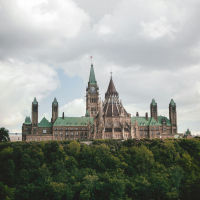
Ottawa, the capital of Canada, is a city rich in history and culture. As the home of the Canadian government, it boasts some of the nation’s most iconic landmarks. These buildings not only showcase Ottawa’s historical development but also play an essential role in defining the city’s unique character. From the grand structures on Parliament Hill to the charming heritage districts, Ottawa’s historic architecture tells the story of the city.
1. Parliament Hill: The Heart of Canada's Political History
No discussion of Ottawa’s historic architecture is complete without mentioning Parliament Hill. Located along the Ottawa River, Parliament Hill is the heart of Canadian democracy. The Centre Block, completed in 1927, is the most iconic structure on the Hill. Designed in the Gothic Revival style, this building is a symbol of Canada’s political life. In the middle of the Centre Block is the Peace Tower, which rises 92 meters and offers stunning views of the city. It is both a memorial to those who have served in Canada’s armed forces and a powerful symbol of national unity.
The Centre Block also houses the House of Commons and Senate, where Canadian laws are debated and enacted. Surrounding the Centre Block are the East and West Blocks, which were constructed in the mid-19th century. These two buildings house various government offices, with their classical designs offering a stark contrast to the more ornate Centre Block. Together, these buildings create a stunning architectural ensemble that represents Canada’s parliamentary system.
2. Rideau Hall: The Official Residence of the Governor General
Another important historical building in Ottawa is Rideau Hall, the official residence of Canada’s Governor General. Located on a 79-acre estate, Rideau Hall was built in 1838 and is a prime example of Georgian and Victorian architecture. It has served as the residence of all of Canada’s governor-generals since 1867, making it a key symbol of Canada’s constitutional monarchy. Visitors can tour Rideau Hall, learning about the role of the Governor General and the history of the Canadian vice-regal office. Throughout the years, many important events have taken place at Rideau Hall, from the signing of treaties to royal visits.
3. The ByWard Market: A Historic Hub of Ottawa
Ottawa’s ByWard Market is one of the oldest neighbourhoods in the city and is home to several historic buildings. Established in 1826, the ByWard Market district has long been an important center for trade and commerce. The market itself, with its red-brick building, is a landmark in Ottawa and is still used today as a hub for local farmers and artisans. The market’s surrounding streets are lined with buildings from the 19th and early 20th centuries, offering a beautiful mix of Federal, Georgian, and Victorian architecture. This historic neighbourhood is a vibrant area where visitors can explore shops, restaurants, and local vendors. The area’s architecture reflects its evolution from a bustling market center to a thriving commercial district. Despite modern development, the ByWard Market district has preserved many of its historic buildings, maintaining its charm and character.
4. Heritage Conservation Districts: Protecting Ottawa’s Architectural Legacy
Ottawa is home to several Heritage Conservation Districts (HCDs), areas designated to protect the city’s architectural heritage. These districts have been recognized for their historical and cultural significance and are carefully regulated to ensure that the original character and design are preserved.
One of the most prominent HCDs is the ByWard Market Heritage Conservation District. This area has long been a part of Ottawa’s commercial life, and its historic buildings reflect the evolution of the city from its early days as a trading post to its current status as the capital of Canada. The preservation of the ByWard Market area ensures that the historical roots of Ottawa are celebrated while providing a thriving cultural and economic space for the community.
Another important HCD is Rockcliffe Park, a picturesque neighbourhood known for its elegant homes and tree-lined streets. Many of the homes in this district were designed by prominent architects in the early to mid-20th century, reflecting various architectural styles, including Colonial Revival, Tudor, and Georgian. Rockcliffe Park is recognized for its atmosphere, with expansive lots and mature trees that add to its charm. The district’s design and natural beauty make it one of Ottawa’s most desirable and historically significant areas.
The Lowertown Heritage Conservation District, located near the ByWard Market, reflects the area’s transformation from a French settlement to a British colonial outpost and eventually to the Canadian capital. The district contains a variety of residential and commercial buildings, many of which date back to the late 19th and early 20th centuries. These structures add to Ottawa’s architectural diversity, offering a glimpse into the city’s social and economic development.
5. The National Arts Centre: A Modern Addition to Ottawa’s Cultural Landscape
The National Arts Centre (NAC) is a modern addition to Ottawa’s architectural landscape that plays an important role in the city’s identity. Opened in 1969, the NAC’s design combines modernist elements with a connection to Ottawa’s historic core. Located on Confederation Square, the NAC offers stunning views of Parliament Hill and the surrounding heritage buildings. Its design, characterized by clean lines and open spaces, contrasts with the older architecture found in the city. The NAC’s integration into the historic center of Ottawa highlights the city’s ability to blend the old with the new, preserving its architectural heritage while embracing a modern edge.
The Architectural Significance of Ottawa’s Historic Buildings
Ottawa’s historical buildings are not just architectural landmarks; they are an essential part of the city’s identity. The preservation of these structures ensures that the city’s cultural heritage is celebrated and passed down to future generations. Ottawa’s Heritage Conservation Districts play a role in safeguarding these buildings, protecting both their physical structure and the stories they represent.
From the grandeur of Parliament Hill to the historic streets of the ByWard Market, Ottawa’s architecture offers a tangible connection to the past. Whether you’re walking through one of the city’s heritage districts or admiring the timeless beauty of Rideau Hall, the buildings in Ottawa offer a rich tapestry of history, culture, and architectural beauty that continues to shape the city’s future.


Post a comment